
Buy ready-to-submit essays. No Plagiarism Guarantee
Note: All our papers are written by real people, not generated by AI.
Don’t submit blindly. Get the same Turnitin analysis your instructor uses, with complete AI detection and similarity reports.
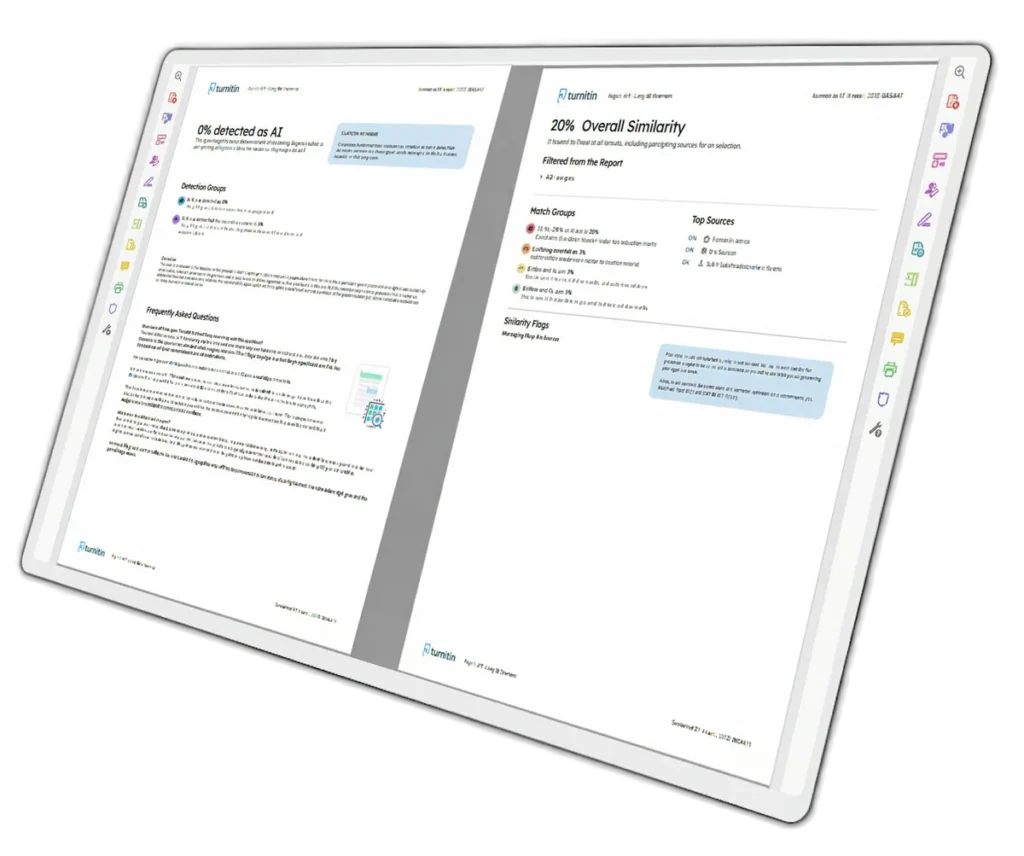
Get full Turnitin AI detection and similarity reports for just $8.99 each
You need a clean Turnitin report before submitting your paper, but you hit a wall. Your school does not give you direct access, or you graduated months ago, or you are an independent researcher without an institutional email. You search for a Turnitin sign up link and find nothing except login pages asking for a Class ID and enrollment key you do not have.
You can get full Turnitin AI detection and similarity reports for just $8.99 each without needing a university account. This is not a workaround or a shared login scam. It is a straightforward service that runs your document through the official Turnitin system and sends you the PDF reports directly, usually within minutes.

Need Help Writing an Essay?
Tell us about your ASSIGNMENT and we will find the best WRITER for your paper.
Get Help Now!Why Most Students Cannot Access Turnitin Directly
Turnitin does not sell individual accounts. The company licenses its software exclusively to schools, colleges, and universities. If you try to find a Turnitin sign up free option on their official website, you will not find one. They do not offer a Turnitin free trial for personal use, and you cannot create a Turnitin account without a Class ID provided by an instructor.
To use the official portal, you need a Turnitin login Class ID and an enrollment key. These credentials come from your teacher or institution. Without them, the Turnitin sign in page is useless to you. This leaves millions of students, freelancers, and independent researchers locked out of the one tool their professors trust most.
Some people try to borrow a friend’s account or buy stolen credentials online. This violates academic integrity policies and puts your work at risk. If you submit through someone else’s account, your paper enters their institutional database. You might accidentally submit work under another student’s name, or your draft could be stored permanently without your consent.
How it works
1️⃣ Upload Documents
Securely upload your documents
using activation code to access our secure portal.
2️⃣Processing
Your document is analyzed for similarity and AI via official Turnitin® API connection.
3️⃣Receive Results
After processing, you will be provided with similarity and AI detection results.
4️⃣Make Changes
Using the provided reports, change what is needed to avoid detection.
What the Reports Actually Show
When you submit a document to Turnitin, the system generates two distinct analyses. You need to understand what each one measures so you know why getting both matters.
The Turnitin Similarity Report compares your text against billions of web pages, academic journals, books, and previously submitted student papers. It highlights matching text and gives you a percentage score. A high percentage does not automatically mean plagiarism; it means the system found matching text. You need to check if those matches are properly cited quotes, bibliography entries, or actual uncited copying.
The AI detection report analyzes writing patterns to identify text likely generated by large language models like ChatGPT. Turnitin looks at sentence complexity, variation, and predictability. The result shows what percentage of your document appears to be AI-written. This is separate from the similarity score. One does not affect the other.
Schools increasingly check both metrics. A paper with 5% similarity might still get flagged if the AI detection shows 80% machine-generated text. Conversely, a paper with 30% similarity might pass if those matches are all properly cited sources and the AI detection shows 0%.
The Myth of Free Access
Search online and you will find dozens of websites claiming to offer a Turnitin free trial or free checks. These are almost universally fake. Turnitin does not have a public API, meaning no third party can technically connect to their database to offer free scans. Those sites either use generic plagiarism checkers with fake Turnitin branding, or they steal your paper to sell later.
You might also find advice telling you to visit your local library for a free Turnitin checker for students. Some university libraries do offer access, but typically only for currently enrolled students with active IDs. Public libraries rarely have Turnitin licenses. The few that do require you to visit in person and submit under staff supervision, which is impractical if you need a quick check at midnight before a deadline.
The bottom line is that legitimate access costs money because institutions pay hefty licensing fees. Anyone offering you a free report is likely cutting corners or breaking rules. Your academic integrity is worth more than a risky shortcut.
How the $8.99 Service Works
Instead of hunting for a Turnitin account you cannot legally obtain, you submit your document through a service that holds a valid institutional license. Here is exactly what happens:
You upload your file through a secure form or messaging app. No need to create an account or remember another password. You simply send your document and specify that you want the AI detection and similarity reports.
The service submits your paper to Turnitin using their licensed credentials, but with one critical setting: non-repository mode. This means your document gets checked against the database, but it is not stored in Turnitin’s archives. When you submit your final paper to your professor later, it will not match against your earlier draft because that draft was never saved. This avoids self-plagiarism flags.
Within minutes, you receive both PDF reports directly in your inbox or chat app. These are the official Turnitin documents, complete with originality scores, AI percentages, and highlighted source matches. You pay only after you receive the reports and verify they are genuine.
Who Uses This Service
Graduate students working on theses often need to check chapters before submitting to advisors. They cannot use their undergraduate login because it expired, and their graduate program has not issued credentials yet. They use this service to verify originality before each committee review.
International students studying at universities that do not provide Turnitin access need to prove their papers are clean before submission. They cannot risk a high similarity score when English is not their first language and citation rules differ from their home country.
Freelance writers and content creators check their work before delivering to clients. Many clients specifically request a Turnitin Similarity Report to verify the content is original, not spun from existing articles.
Researchers preparing manuscripts for journal submission use the service to check against the massive Turnitin database, which includes many journals not covered by free web-based checkers. A clean report strengthens their submission package.
Understanding Your Results
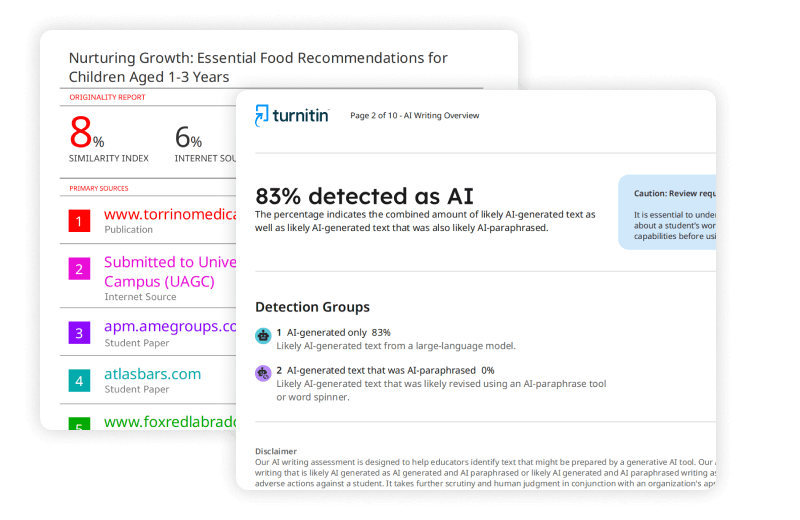
When you get your reports, you need to read them correctly. The similarity percentage alone tells you little. Look at the source list on the right side of the report. If one source contributes 40% of the matches, you have a problem. You probably relied too heavily on a single paper or failed to paraphrase adequately.
If the matches scatter across dozens of sources with only 1% or 2% each, and they appear in your bibliography or as cited quotes, you likely have nothing to worry about. The system flags common phrases and technical terminology too, so a 15% similarity score often means nothing in a technical paper with standard definitions.
For the AI report, understand that Turnitin only flags text it is 98% confident is AI-generated. If your report shows 0%, it means either you wrote everything yourself or any AI assistance fell below that confidence threshold. If it shows 20% or higher, review those highlighted sections. They probably sound generic, use perfect but repetitive sentence structures, or lack specific examples.
Fixing AI-flagged text requires more than changing a few words. You need to add personal analysis, specific data from your experience, or unique transitions between ideas. Run the revised sections through the checker again to confirm the percentage drops.
Addressing Common Concerns
Many students worry that using a third-party service violates their university’s honor code. It does not. You are not submitting someone else’s work as your own. You are checking your own writing for unintentional similarities and AI patterns before final submission. Think of it like running a spell-checker or grammar tool.
Others worry about privacy. That is why the non-repository option matters. When you check a paper through a standard institutional Turnitin account, your professor might enable “store in repository” mode, meaning your paper enters the database forever. Future checks will flag your paper against itself. Using a service that explicitly uses non-repository mode protects your intellectual property.
Some ask if they can get a Turnitin sign in to check their own papers repeatedly throughout the writing process. Since you cannot get your own account without a Class ID, the per-report model works better. You pay only when you need a check, rather than maintaining an expensive subscription you rarely use.
The Difference Between Similarity and AI Detection
Students often confuse these two metrics. The Turnitin Similarity Report finds text that matches existing sources. It answers the question: “Have I seen this before?” The AI detection answers: “Did a human write this?”
You can have 0% similarity and 100% AI detection. This happens when someone generates a completely original article using ChatGPT that cites no sources and copies no text, but uses machine-generated language patterns.
You can also have 50% similarity and 0% AI detection. This happens when a student copies heavily from one or two sources without paraphrasing, but writes the text themselves rather than using AI.
Both issues trigger academic misconduct investigations. You need to avoid both. That is why getting the combined report for $8.99 saves you money compared to paying for separate checks elsewhere or facing a plagiarism hearing.
Why Turnitin Remains the Gold Standard
Other plagiarism checkers exist. Grammarly scans web pages. Copyscape checks published content. Quetext uses its own database. None of them access the student paper repository that Turnitin has built over twenty years. When your professor runs your paper through Turnitin, they see matches to papers submitted at other universities last semester. Free checkers cannot show you those matches.
The AI detection in Turnitin also differs from free online AI detectors. Many free tools use simple algorithms that flag complex human writing as AI or miss obvious machine text. Turnitin’s model trains on actual student submissions and known AI outputs, making it more accurate though not perfect.
Your professor trusts Turnitin because they know its strengths and limitations. When you bring them a report from an alternative checker, they might accept it, or they might run your paper through Turnitin anyway and find different results. Getting the official report upfront eliminates surprises.
How to Order Your Report
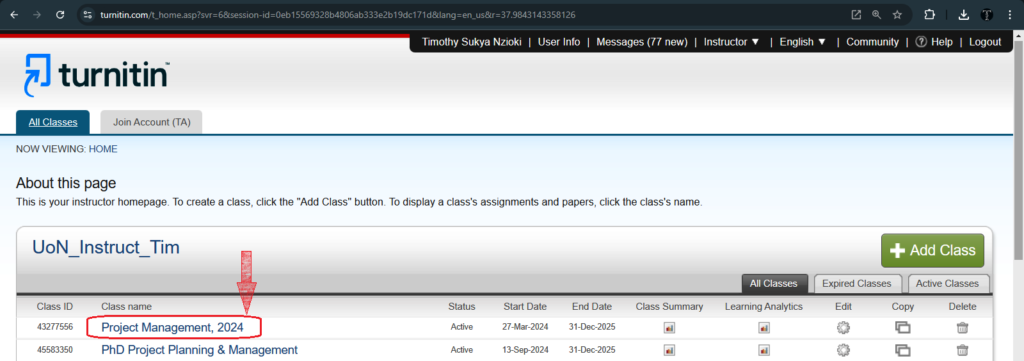
The process takes less time than reading this page. You prepare your document in Word or PDF format. You do not need to remove references or quotes; the system can exclude those automatically if configured correctly.
You contact the service and specify you want the full package: both the AI detection and similarity reports for $8.99. You send your file. The service runs the check and returns the official PDFs. You review them, verify they are authentic Turnitin documents with current timestamps, and complete payment.
If the similarity score is higher than you expected, you revise your paper and request another check. Many students order two or three checks during the writing process: one for the rough draft to catch major issues, one after revisions, and a final check before submission.
Final Thoughts on Academic Integrity
Checking your work before submission is not cheating. It is due diligence. Professors expect you to cite sources correctly and write original analysis. They do not expect you to memorize the entire internet to know if your phrasing accidentally matches a paper from a university in another country.
The stress of not knowing kills your confidence. You submit your paper wondering if you accidentally plagiarized or if your writing sounds too robotic. For less than the cost of two coffees, you remove that uncertainty. You submit knowing exactly what your professor will see when they run the same check.
Stop searching for a Turnitin login Class ID you cannot obtain. Stop hoping for a Turnitin free trial that does not exist. Get the reports you need through a legitimate channel that respects your privacy and your deadline. Your academic career is worth the $8.99 investment.
#1 Trusted Turnitin AI & Plagiarism Checker
Get Fast Writing Help – No Plagiarism Guarantee!
Need assistance with your writing? Look no further! Our team of skilled writers is prepared to provide you with prompt writing help. Rest assured, your work will be entirely original and free from any plagiarism, as we offer a guarantee against it. Experience swift and dependable writing assistance by reaching out to us today!
Top-Rated Essay Writing Service | GET Flawless papers for All Your classes!